Madrid Travel Guide: Where to Stay, Things to Do & More
Our Madrid Travel Guide helps you plan where to stay in Madrid, what to see, how to get around, how many days to spend in the city and how to combine its best hotels, historic landmarks, museums, restaurants, neighborhoods and tours into one memorable trip.
Madrid brings together royal heritage, world-class art, lively squares and one of Europe’s most exciting food scenes. Explore the Royal Palace and Plaza Mayor, admire masterpieces at the Prado Museum, stroll through Retiro Park, discover Gran Vía’s shopping and entertainment, or experience the traditional tapas bars of La Latina.
Choosing the right neighborhood can make your visit considerably easier. Stay around Puerta del Sol or Gran Vía for central sightseeing, Barrio de las Letras for art and historic atmosphere, Salamanca for luxury shopping, Chueca and Malasaña for nightlife, or Retiro for a more relaxed base near museums and green spaces.
For most first-time visitors, the best approach is to choose your hotel area first, then organize sightseeing around nearby attractions and transport connections. Whether you have two days or a full week, this guide will help you compare Madrid’s essential experiences, plan practical itineraries, explore local restaurants and find the right accommodation for your travel style.
Note: Some links on this page are affiliate links. We may earn a commission if you book through them, at no extra cost to you.
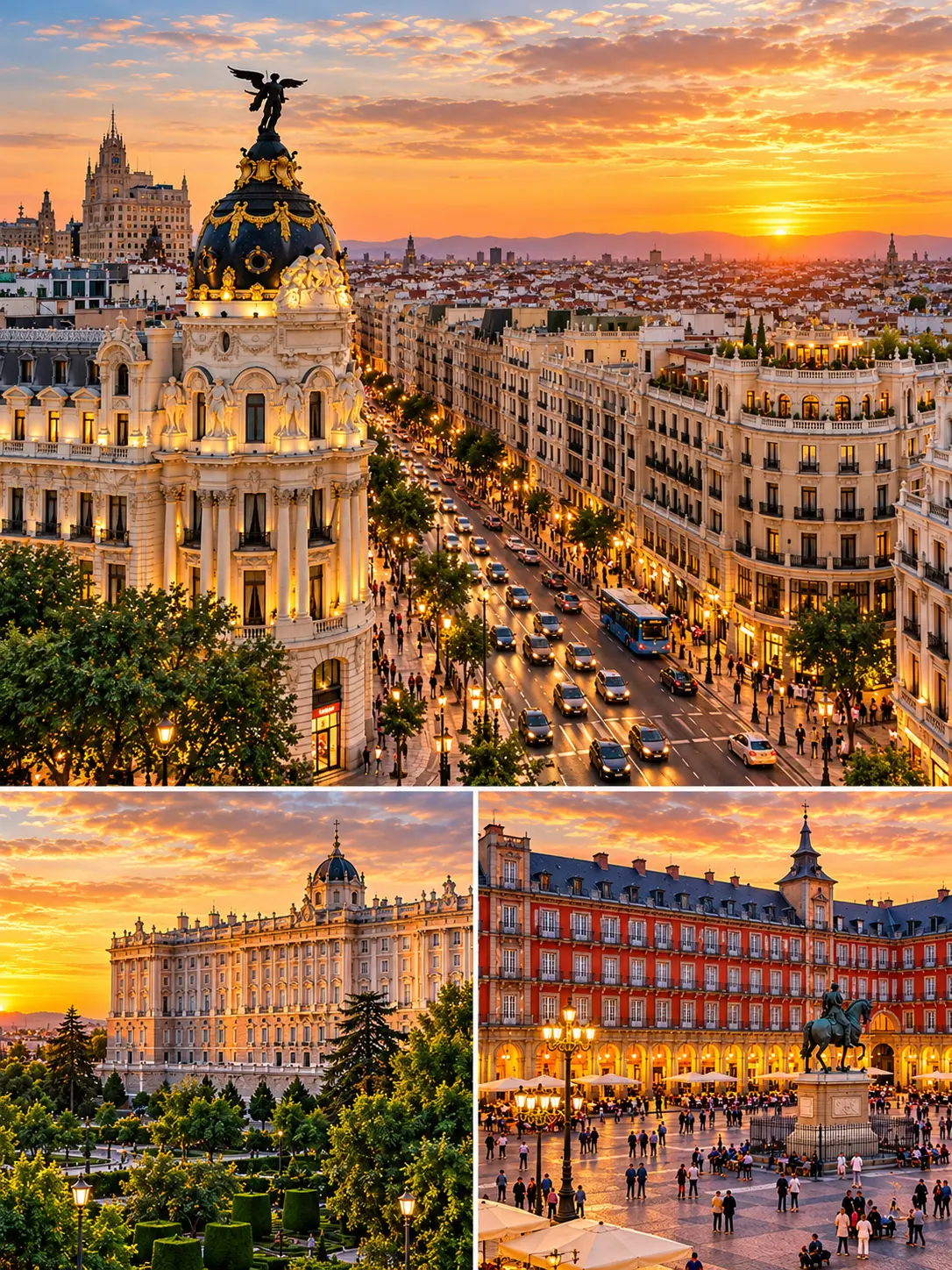
Quick Guide: Where to Stay in Madrid
The best area to stay in Madrid depends on whether you prioritize historic sightseeing, royal landmarks, world-class museums, luxury shopping, nightlife, traditional restaurants or convenient transport connections. Choosing the right neighborhood can make exploring the Spanish capital easier while giving your trip the atmosphere that suits you best.
For most first-time visitors, Puerta del Sol and Gran Vía offer the strongest overall convenience, while Madrid de los Austrias is ideal for royal history and Barrio de las Letras for art and culture. Salamanca appeals to luxury travelers, Chueca and Malasaña to nightlife enthusiasts, and Retiro to families. La Latina and Lavapiés offer distinctive dining and local experiences, while Atocha, Chamartín and the airport area are practical for transport-focused stays. Explore our detailed neighborhood guide for additional options, including Chamberí.
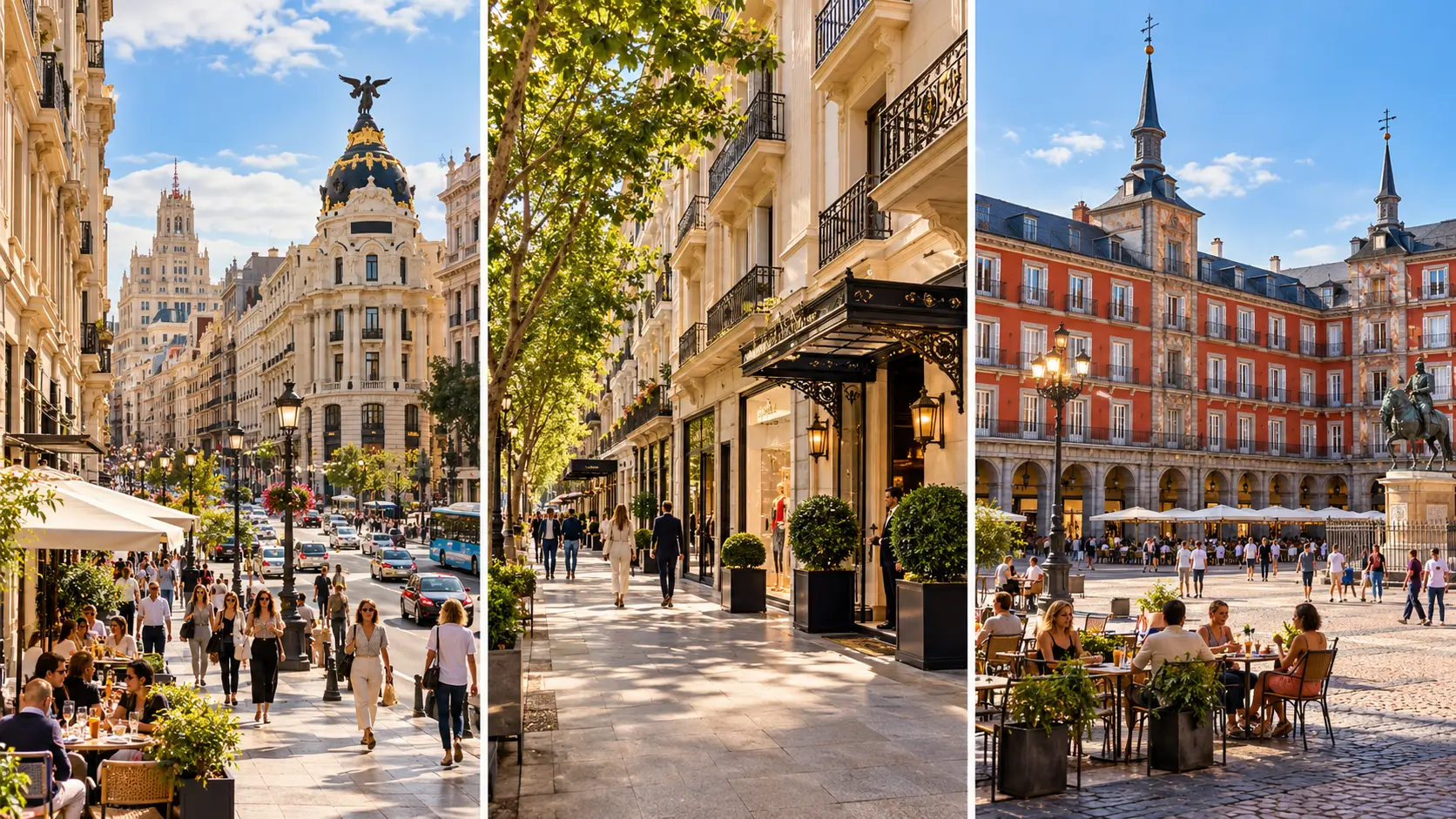
Puerta del Sol and Gran Vía
Best for: First-time visitors, central sightseeing, shopping, restaurants, theaters, walkability and short city breaks.
Stay around Puerta del Sol and Gran Vía if you want Madrid’s historic attractions, shopping streets and entertainment within easy reach. This central area provides convenient access to Plaza Mayor, the Royal Palace, major restaurants and public transport, making it particularly attractive for visitors with limited time. Sol is ideal for historic sightseeing, while Gran Vía offers a livelier atmosphere with theaters, shopping and rooftop bars.
RECOMMENDED GUIDES
Best Hotels in Madrid City Centre →
Best Hotels Near Puerta del Sol, Madrid →
Best Hotels Near Gran Vía, Madrid →
Madrid de los Austrias
Best for: Royal Palace sightseeing, historic architecture, romantic city breaks, traditional restaurants and classic Madrid atmosphere.
Choose Madrid de los Austrias if you want to stay among the city’s most important royal landmarks and historic squares. The area around Plaza Mayor, Plaza de Oriente and Ópera combines atmospheric streets, traditional restaurants and convenient access to the Royal Palace, Almudena Cathedral and Teatro Real. It is particularly appealing for couples and first-time visitors who prefer historic character over busy commercial boulevards.
Barrio de las Letras and Paseo del Arte
Best for: Prado Museum, art lovers, cultural sightseeing, boutique hotels, couples, historic streets and restaurants.
Stay in Barrio de las Letras if you want historic charm, excellent restaurants and convenient access to Madrid’s famous art museums. The Literary Quarter offers atmospheric streets around Plaza de Santa Ana and Calle de Huertas, while nearby Paseo del Prado provides access to the Prado and Thyssen-Bornemisza museums. This area is especially attractive for couples and cultural travelers seeking a walkable, characterful alternative to Gran Vía.
RECOMMENDED GUIDES
Best Hotels in Barrio de las Letras, Madrid →
Best Hotels Near Prado Museum, Madrid →
Best Boutique Hotels in Madrid →
Salamanca
Best for: Luxury hotels, designer shopping, fine dining, sophisticated couples, elegant streets and upscale city breaks.
Choose Salamanca if luxury shopping, refined restaurants and elegant accommodation are central to your Madrid experience. The neighborhood’s famous Golden Mile features designer boutiques along Calle de Serrano, Calle de José Ortega y Gasset and surrounding streets. Salamanca offers a more residential and sophisticated atmosphere than the historic centre, making it particularly attractive for luxury travelers and couples who prioritize comfort, shopping and upscale dining.
Chueca and Malasaña
Best for: Nightlife, trendy restaurants, independent cafés, creative culture, boutique hotels, shopping and lively city breaks.
Stay in Chueca or Malasaña if you want to experience Madrid’s fashionable restaurants, independent shops and energetic social scene. Chueca is particularly well known for its welcoming LGBTQ+ atmosphere, cocktail bars and contemporary dining, while Malasaña offers vintage shopping, creative cafés and alternative culture. Both neighborhoods are conveniently located near Gran Vía, making them excellent choices for couples and travelers who enjoy lively evenings.
RECOMMENDED GUIDES
Best Hotels in Chueca, Madrid →
Best Hotels in Malasaña, Madrid →
Best Boutique Hotels in Madrid →
Retiro and Jerónimos
Best for: Families, Retiro Park, museums, quieter surroundings, couples, outdoor activities and relaxed sightseeing.
Choose Retiro and Jerónimos if you prefer elegant streets, green spaces and a calmer atmosphere near Madrid’s cultural attractions. Retiro Park provides excellent opportunities for walking and family activities, while nearby Jerónimos offers convenient access to the Prado Museum, Royal Botanical Garden and Puerta de Alcalá. This area works particularly well for families and couples who want comfortable sightseeing without staying directly in Madrid’s busiest shopping and nightlife districts.
La Latina and Lavapiés
Best for: Traditional tapas, multicultural dining, historic streets, local markets, contemporary art and neighborhood experiences.
Stay in La Latina or Lavapiés if food, cultural diversity and local atmosphere matter more than luxury shopping or prestigious hotel addresses. La Latina is famous for its traditional tapas bars around Cava Baja, historic squares and El Rastro market. Nearby Lavapiés offers international restaurants, independent cultural spaces and a creative atmosphere close to the Reina Sofía Museum. Both are particularly rewarding for travelers who enjoy exploring Madrid beyond its main tourist streets.
Atocha, Chamartín and Madrid Airport
Best for: Railway connections, day trips, business travel, short stays, airport transfers and transport convenience.
Choose Atocha or Chamartín if rail connections are a major part of your Madrid itinerary. Atocha is particularly convenient for museum visits and many high-speed railway journeys, while Chamartín is a practical base for travelers using northern rail connections or visiting nearby business districts. Hotels near Madrid Airport are better suited to early departures, late arrivals and overnight stopovers. Always confirm your specific railway station or airport transfer route before booking.
Best Things to Do in Madrid
Madrid is best explored by combining nearby attractions rather than traveling repeatedly between its historic centre, major museums, royal landmarks and outer neighborhoods. Many of the city’s essential sights are within walking distance of one another, while destinations such as the Santiago Bernabéu Stadium are easy to incorporate using public transport.
For most first-time visitors, the best things to do in Madrid include exploring Puerta del Sol and Plaza Mayor, visiting the Royal Palace, discovering masterpieces at the Prado Museum, relaxing in Retiro Park, walking along Gran Vía and experiencing the city’s famous food and cultural scene. The Reina Sofía Museum, Santiago Bernabéu Stadium and traditional streets of La Latina provide further opportunities to experience Madrid beyond its most recognizable landmarks.
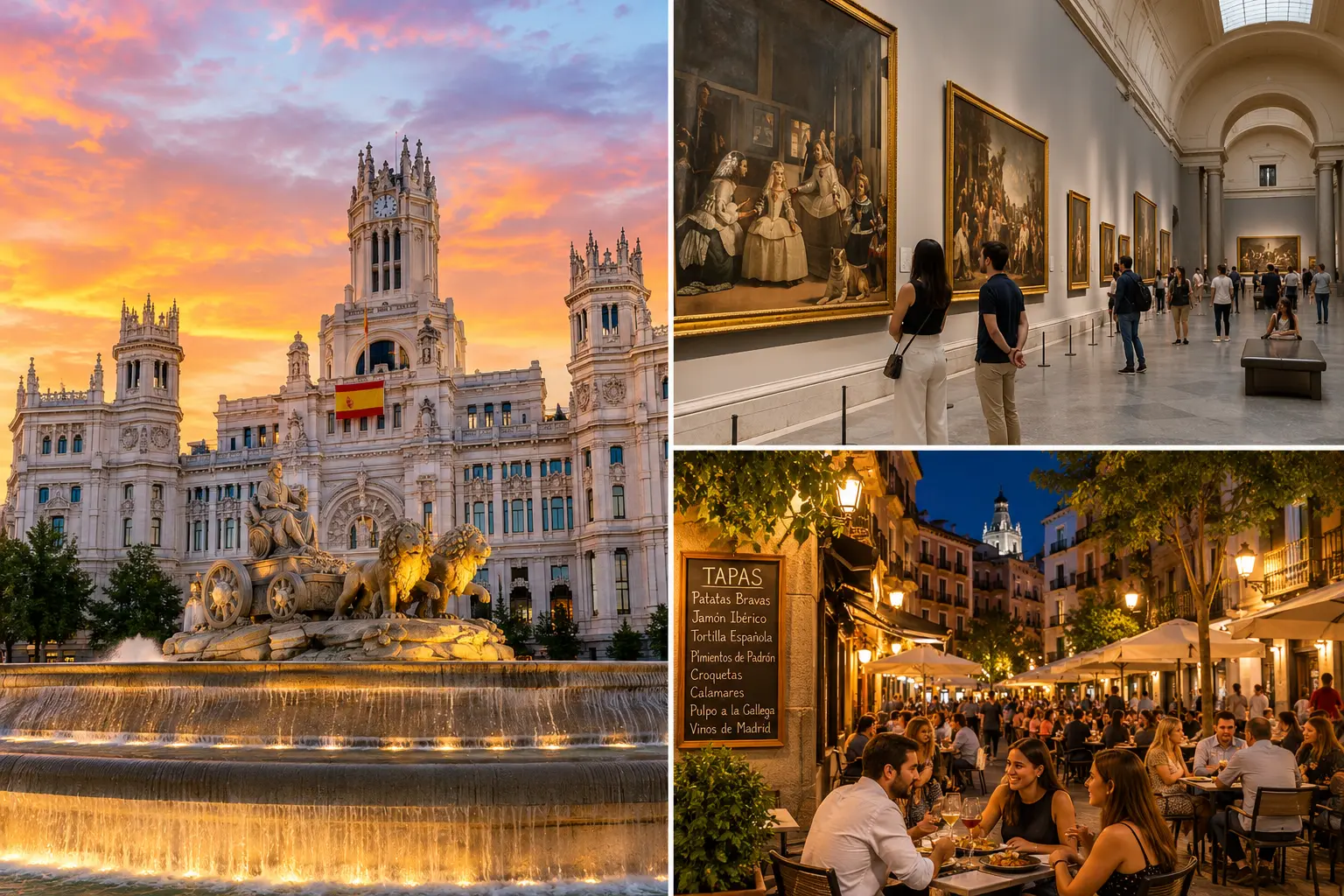
Puerta del Sol, Plaza Mayor and Historic Madrid
Best for: First-time visitors, historic sightseeing, architecture, photography, walking, traditional squares and classic Madrid experiences.
Start exploring Madrid around Puerta del Sol, one of the city’s most famous central squares, before following the historic streets toward Plaza Mayor and Madrid de los Austrias. This walk introduces visitors to traditional architecture, lively pedestrian streets, historic shops and some of the capital’s most recognizable landmarks. The surrounding area also offers convenient access to restaurants, cafés and the Royal Palace district, making it an excellent starting point for a first day in Madrid.
PLANNING TIP
Explore Puerta del Sol and Plaza Mayor together, then continue toward the Royal Palace or La Latina rather than returning to the same historic streets on separate sightseeing days.
RECOMMENDED GUIDES
Best Hotels Near Puerta del Sol, Madrid →
Best Hotels Near Plaza Mayor, Madrid →
Best Hotels in Madrid City Centre →
Royal Palace and Almudena Cathedral
Best for: Royal history, architecture, first-time visitors, couples, cultural sightseeing, photography and guided palace tours.
The Royal Palace of Madrid is one of Spain’s most impressive historic landmarks, offering visitors an opportunity to explore magnificent royal interiors, ceremonial rooms and centuries of Spanish history. Nearby Almudena Cathedral, Plaza de Oriente and Teatro Real create an attractive historic setting that rewards exploration beyond the palace itself. The surrounding Madrid de los Austrias district also provides elegant squares, traditional restaurants and picturesque streets, making this area an essential part of a classic Madrid itinerary.
PLANNING TIP
Reserve palace admission in advance when your sightseeing schedule is limited, and check for official ceremonies or temporary closures. Combine the visit with Almudena Cathedral, Plaza de Oriente and nearby historic streets.
RECOMMENDED GUIDES
Best Hotels Near Plaza Mayor, Madrid →
Best Luxury Hotels in Madrid →
Best Hotels in Madrid City Centre →
Compare hotels near Madrid’s Royal Palace →
Prado Museum and Paseo del Arte
Best for: Art lovers, European painting, cultural sightseeing, couples, museums, history and first-time visitors.
The Prado Museum is one of Madrid’s defining cultural attractions, celebrated for its extraordinary collection of European paintings, including masterpieces by Velázquez, Goya, El Greco and other influential artists. Located along Paseo del Prado, the museum forms part of Madrid’s famous Art Walk, which also connects the Thyssen-Bornemisza and Reina Sofía museums. The surrounding district combines elegant architecture, historic fountains and cultural landmarks, making it especially rewarding for travelers interested in art and Spanish heritage.
PLANNING TIP
Choose a selection of major artworks or galleries before visiting rather than trying to see the entire collection in one visit. Book a suitable admission time and combine the museum with nearby Paseo del Prado or Retiro Park.
RECOMMENDED GUIDES
Best Hotels Near Prado Museum, Madrid →
Best Hotels in Barrio de las Letras, Madrid →
Best Luxury Hotels in Madrid →
Retiro Park and Puerta de Alcalá
Best for: Families, couples, gardens, outdoor activities, walking, photography, relaxed sightseeing and cultural city breaks.
Retiro Park provides one of Madrid’s most enjoyable contrasts to the busy historic centre, offering landscaped gardens, shaded walking paths, monuments and a large ornamental lake. Visitors can enjoy the park’s green spaces, discover the Monument to Alfonso XII and explore the surrounding Jerónimos district. Nearby Puerta de Alcalá and the cultural attractions along Paseo del Prado make Retiro particularly convenient for combining outdoor relaxation with museum visits and elegant central Madrid sightseeing.
PLANNING TIP
Visit Retiro Park after exploring the Prado Museum or nearby Jerónimos attractions. Allow time for a relaxed walk rather than treating the park as a quick photo stop, especially when traveling with children.
RECOMMENDED GUIDES
Best Hotels Near Retiro Park, Madrid →
Best Family Hotels in Madrid →
Best Hotels Near Prado Museum, Madrid →
Gran Vía, Plaza de España and Temple of Debod
Best for: Shopping, architecture, theaters, rooftop views, photography, couples, nightlife and evening sightseeing.
Gran Vía is Madrid’s most famous shopping and entertainment boulevard, known for its grand early twentieth-century buildings, theaters, fashion stores and rooftop venues. Walking west along the avenue leads toward Plaza de España, where visitors can explore nearby monuments and continue toward the Temple of Debod, an ancient Egyptian temple set within a scenic park. This area offers an excellent combination of modern city energy, impressive architecture and memorable evening views, particularly for travelers who enjoy exploring Madrid after dark.
PLANNING TIP
Explore Gran Vía during the afternoon, then continue toward Plaza de España and the Temple of Debod around sunset. Allow additional time if shopping, rooftop bars or an evening theater performance are part of your plans.
RECOMMENDED GUIDES
Best Hotels Near Gran Vía, Madrid →
Best Hotels in Madrid City Centre →
Best Hotels in Malasaña, Madrid →
Santiago Bernabéu Stadium
Best for: Football fans, Real Madrid supporters, stadium tours, sports history, families and modern Madrid experiences.
The Santiago Bernabéu Stadium is one of Madrid’s most recognizable sporting landmarks and a major attraction for football enthusiasts. Home to Real Madrid, the stadium offers visitors an opportunity to explore the club’s history through its museum and stadium-tour experiences. Its modern design and sporting heritage make it particularly appealing to families, football supporters and travelers looking to experience a different side of Madrid beyond royal palaces and art museums.
PLANNING TIP
Check the official stadium-tour schedule before booking, as available areas and visiting arrangements can change around matches, events and stadium operations. Football fans should plan their visit separately from the historic-centre sightseeing route.
RECOMMENDED GUIDES
Best Hotels Near Santiago Bernabéu Stadium, Madrid →
Best Hotels Near Madrid Chamartín Station →
Best Hotels in Madrid →
Reina Sofía Museum and Barrio de las Letras
Best for: Modern art, contemporary culture, Picasso, historic neighborhoods, museums, couples and cultural sightseeing.
The Reina Sofía Museum is one of Madrid’s most important cultural institutions, particularly celebrated for its modern and contemporary art collection and Picasso’s masterpiece Guernica. Its location near Atocha makes it easy to combine a museum visit with the surrounding cultural district and Barrio de las Letras, Madrid’s atmospheric Literary Quarter. The neighborhood adds historic streets, traditional restaurants, independent cafés and attractive squares, creating a rewarding combination of world-class art and local character.
PLANNING TIP
Combine the Reina Sofía Museum with Barrio de las Letras, Plaza de Santa Ana and nearby restaurants. If you also plan to visit the Prado and Thyssen-Bornemisza museums, divide the art collections into manageable visits rather than rushing through all three.
RECOMMENDED GUIDES
Best Hotels in Barrio de las Letras, Madrid →
Best Hotels Near Madrid Atocha Station →
Best Hotels Near Prado Museum, Madrid →
La Latina, Tapas Streets and El Rastro
Best for: Traditional tapas, food lovers, historic streets, local markets, couples, weekend exploration and authentic Madrid atmosphere.
La Latina is one of Madrid’s most atmospheric historic neighborhoods, known for its traditional taverns, winding streets and lively restaurant scene. Calle de Cava Baja is particularly popular for tapas, while Plaza de la Cebada and nearby historic squares offer opportunities to explore local Madrid beyond the main sightseeing routes. On Sundays and public holidays, the famous El Rastro flea market attracts visitors to the surrounding streets, adding antiques, vintage finds and bustling market atmosphere to this distinctive neighborhood.
PLANNING TIP
Visit El Rastro on a Sunday or public holiday if the market is a priority, ideally earlier in the morning to avoid the busiest crowds. Afterwards, explore La Latina’s tapas streets and traditional squares for lunch or a relaxed afternoon.
RECOMMENDED GUIDES
Best Hotels in Madrid City Centre →
Best Value Hotels in Madrid →
Best Boutique Hotels in Madrid →
How Many Days Do You Need in Madrid?
For most first-time visitors, 3 to 4 days in Madrid offers the best balance between historic sightseeing, world-class museums, royal landmarks, parks, traditional food and neighborhood exploration. This gives you enough time to experience Puerta del Sol, the Royal Palace, Prado Museum, Retiro Park, Gran Vía and some of Madrid’s most atmospheric districts without making every day feel rushed.
You can enjoy Madrid’s main highlights in 2 days, although your itinerary will need to be more selective. With 5 days or more, you can explore additional museums, discover neighborhoods such as Salamanca, Malasaña and Lavapiés, enjoy longer restaurant visits or add a day trip to Toledo or Segovia. The ideal length depends on your interests, travel pace and whether you want to explore beyond the capital.
1 Day in Madrid
Best for: Stopovers, business travelers, first-time highlights, walking, historic landmarks and very short visits.
With one day in Madrid, focus on the historic centre rather than trying to cover the entire city. Start around Puerta del Sol and Plaza Mayor, continue toward the Royal Palace and Almudena Cathedral, then explore Gran Vía and its impressive architecture. Depending on your interests, add a traditional tapas stop, a rooftop viewpoint or an evening walk. This compact itinerary provides an excellent introduction to Madrid’s historic character without spending too much time on transport.
BEST HOTEL BASE
Choose Puerta del Sol or Gran Vía for maximum walkability and convenient access to the main historic landmarks, restaurants and public transport.
RECOMMENDED GUIDES
Best Hotels in Madrid City Centre →
Best Hotels Near Puerta del Sol, Madrid →
Best Hotels Near Gran Vía, Madrid →
2 Days in Madrid
Best for: Weekend city breaks, couples, first-time visitors, historic sightseeing, art museums and short cultural trips.
Two days in Madrid allows you to explore the city’s most important historic landmarks while adding a major cultural experience. Spend your first day around Puerta del Sol, Plaza Mayor, Madrid de los Austrias and the Royal Palace, then enjoy Gran Vía in the evening. Dedicate your second day to the Prado Museum, Paseo del Arte and Retiro Park, with time for Barrio de las Letras or a traditional restaurant. This itinerary provides a rewarding introduction to Madrid, although several neighborhoods and museums will remain for a future visit.
BEST HOTEL BASE
Stay in Madrid City Centre, Barrio de las Letras or near Gran Vía for convenient access to historic landmarks, museums and restaurants.
RECOMMENDED GUIDES
Best Hotels for First-Time Visitors in Madrid →
Best Hotels in Barrio de las Letras, Madrid →
Best Hotels Near Prado Museum, Madrid →
3 Days in Madrid
Best for: First-time visitors, couples, royal history, museums, shopping, food experiences and balanced city breaks.
Three days in Madrid gives you time to combine the historic centre and Royal Palace with the Prado Museum, Retiro Park and several distinctive neighborhoods. Spend one day exploring Sol, Plaza Mayor and Madrid de los Austrias, another around Paseo del Arte and Retiro, and a third discovering Gran Vía, Chueca, Malasaña or La Latina. Football enthusiasts can also include a Santiago Bernabéu Stadium tour, while art lovers may prefer the Reina Sofía Museum. This is an excellent option for visitors who want Madrid’s essential experiences without an overly demanding schedule.
BEST HOTEL BASE
Choose Puerta del Sol or Gran Vía for central sightseeing, Barrio de las Letras for museums and culture, or Chueca for restaurants and evening entertainment.
RECOMMENDED GUIDES
Best Hotels in Madrid →
Best Hotels for First-Time Visitors in Madrid →
Best Hotels in Chueca, Madrid →
4 Days in Madrid
Best for: First-time visitors, families, couples, museums, cultural experiences, food lovers and relaxed sightseeing.
Four days is one of the strongest choices for discovering Madrid at a comfortable pace. You can dedicate separate sightseeing blocks to the historic centre and Royal Palace, Prado Museum and Retiro Park, Reina Sofía Museum and Barrio de las Letras, and neighborhoods such as Salamanca, Chueca or Malasaña. There is also time for a Santiago Bernabéu Stadium tour, a food-focused experience or an evening cultural performance. This length allows you to enjoy Madrid’s restaurants, traditional squares and parks without treating every attraction as a rushed stop.
BEST HOTEL BASE
Stay in Madrid City Centre, Barrio de las Letras, Retiro or Salamanca, depending on whether your priorities are historic sightseeing, art museums, family activities or elegant accommodation.
RECOMMENDED GUIDES
Best Hotels in Madrid →
Best Family Hotels in Madrid →
Best Hotels Near Retiro Park, Madrid →
5 Days in Madrid
Best for: Relaxed city breaks, food lovers, art enthusiasts, repeat visitors, families, neighborhood exploration and day trips.
Five days in Madrid offers enough flexibility to experience the major landmarks while discovering a more local side of the capital. Alongside the Royal Palace, Prado Museum, Retiro Park and Gran Vía, explore La Latina’s tapas streets, Lavapiés’ multicultural restaurants, Salamanca’s elegant shopping district and the creative neighborhoods of Chueca and Malasaña. You can spend longer in museums, enjoy a food tour or add a day trip to Toledo or Segovia without sacrificing Madrid’s main attractions. This is an excellent choice for travelers who prefer a more relaxed and varied itinerary.
BEST HOTEL BASE
Choose Barrio de las Letras, Salamanca, Chueca or Chamberí according to whether you prefer cultural sightseeing, luxury shopping, nightlife or a more residential atmosphere.
RECOMMENDED GUIDES
Best Hotels in Salamanca, Madrid →
Best Boutique Hotels in Madrid →
Best Value Hotels in Madrid →
6 Days or More in Madrid
Best for: Slow travel, repeat visitors, families, longer holidays, cultural exploration, food experiences and multiple day trips.
With six days or more in Madrid, you can explore the capital beyond its most famous landmarks and enjoy a more flexible travel experience. Spend additional time in museums, traditional markets, parks and neighborhoods such as Chamberí, Lavapiés, La Latina and Salamanca. Longer visits also make it easier to discover local restaurants, attend cultural performances, visit the Santiago Bernabéu Stadium or explore attractions beyond the historic centre. Consider adding one or two day trips to destinations such as Toledo, Segovia or Aranjuez while keeping enough time to enjoy Madrid itself.
BEST HOTEL BASE
For longer stays, consider Chamberí, Salamanca, Retiro or a well-located serviced apartment. If frequent railway journeys are part of your plans, accommodation near Atocha or Chamartín may offer additional convenience.
RECOMMENDED GUIDES
Best Serviced Apartments in Madrid →
Best Hotels Near Madrid Atocha Station →
Best Hotels Near Madrid Chamartín Station →
Suggested Madrid Itineraries
Madrid is easiest to explore when you organize each sightseeing day around nearby attractions rather than moving repeatedly between the historic centre, royal landmarks, museums and outer neighborhoods. These suggested Madrid itineraries help you combine the city’s essential experiences with traditional food, cultural attractions, parks, shopping and the right hotel location for your travel style.
Use these routes as flexible starting points rather than strict schedules. A well-planned Madrid itinerary should leave enough time for the Royal Palace, Prado Museum, Retiro Park, Gran Vía and historic squares, while allowing space for tapas, evening entertainment and exploring neighborhoods such as Barrio de las Letras, Chueca, Malasaña and La Latina.
Classic First-Time Madrid Itinerary
Best for: First-time visitors, couples, historic landmarks, royal sightseeing, museums, walking and short city breaks.
Start with Puerta del Sol, Plaza Mayor and the Royal Palace, then explore Almudena Cathedral and Madrid de los Austrias. Dedicate another sightseeing block to the Prado Museum, Retiro Park and Barrio de las Letras, before spending an evening around Gran Vía. With a third day, add the Reina Sofía Museum, La Latina’s tapas streets or a Santiago Bernabéu Stadium tour, depending on your interests. This itinerary offers an excellent introduction to Madrid’s history, culture and lively atmosphere.
BEST AREAS TO STAY
Puerta del Sol, Gran Vía, Madrid de los Austrias or Barrio de las Letras
RECOMMENDED GUIDES
Best Hotels for First-Time Visitors in Madrid →
Best Hotels in Madrid City Centre →
Best Hotels Near Puerta del Sol, Madrid →
Museums and Culture Madrid Itinerary
Best for: Art lovers, museums, Spanish history, architecture, couples, cultural sightseeing and longer city breaks.
Build your itinerary around Madrid’s Golden Triangle of Art, including the Prado, Thyssen-Bornemisza and Reina Sofía museums. Combine the Prado with Retiro Park and Puerta de Alcalá, then explore the Reina Sofía and the historic streets of Barrio de las Letras on another day. Add the Royal Palace, Royal Collections Gallery or an evening cultural performance for a broader experience of Madrid’s artistic and royal heritage. Allow enough time to enjoy the museums rather than rushing between collections.
BEST AREAS TO STAY
Barrio de las Letras, Paseo del Prado, Retiro or Madrid City Centre
RECOMMENDED GUIDES
Best Hotels Near Prado Museum, Madrid →
Best Hotels in Barrio de las Letras, Madrid →
Best Boutique Hotels in Madrid →
Romantic Madrid Itinerary
Best for: Couples, anniversaries, romantic weekends, elegant hotels, historic streets, rooftop views and memorable dining.
Begin with a relaxed walk through Madrid de los Austrias, Plaza de Oriente and the Royal Palace area, then discover the atmospheric streets and restaurants of Barrio de las Letras. Spend another day exploring Retiro Park, the Prado district and Salamanca’s elegant shopping streets. In the evening, enjoy sunset views near the Temple of Debod, a rooftop terrace overlooking Gran Vía or a special dinner in one of Madrid’s refined neighborhoods. This itinerary combines historic charm, cultural experiences and time to enjoy the city together.
BEST AREAS TO STAY
Barrio de las Letras, Salamanca, Madrid de los Austrias or Salesas
RECOMMENDED GUIDES
Best Luxury Hotels in Madrid →
Best Boutique Hotels in Madrid →
Best Hotels in Salamanca, Madrid →
Compare romantic Madrid hotel areas →
Food, Tapas and Neighborhoods Madrid Itinerary
Best for: Food lovers, couples, tapas bars, traditional markets, restaurants, creative neighborhoods and local experiences.
Explore Madrid through its most distinctive food neighborhoods, starting with traditional tapas along Cava Baja in La Latina and the historic squares surrounding Plaza de la Cebada. Continue toward Lavapiés for multicultural restaurants and Mercado de San Fernando, then dedicate another evening to Chueca and Malasaña’s contemporary dining, cocktail bars and independent cafés. Barrio de las Letras adds atmospheric taverns and historic streets, while Chamberí offers a more residential restaurant scene. This itinerary is ideal for travelers who want to experience Madrid beyond its main tourist attractions.
BEST AREAS TO STAY
La Latina, Chueca, Malasaña, Barrio de las Letras or Chamberí
RECOMMENDED GUIDES
Best Hotels in Chueca, Madrid →
Best Hotels in Malasaña, Madrid →
Best Hotels in Madrid City Centre →
Family Madrid Itinerary
Best for: Families with children, parks, museums, football experiences, outdoor activities, sightseeing and relaxed travel.
Families usually benefit from shorter sightseeing days with plenty of time for outdoor activities. Combine Retiro Park with nearby museums or the Royal Botanical Garden, then use another day for the Royal Palace and historic centre. Football-loving families can add the Santiago Bernabéu Stadium, while Madrid Río offers green spaces, walking routes and play areas along the Manzanares River. With more time, consider Casa de Campo or an age-appropriate museum experience. This itinerary balances Madrid’s major attractions with activities that allow children to explore at a comfortable pace.
BEST AREAS TO STAY
Retiro, Jerónimos, Madrid City Centre or accommodation near Madrid Río
RECOMMENDED GUIDES
Best Family Hotels in Madrid →
Best Hotels Near Retiro Park, Madrid →
Best Hotels Near Santiago Bernabéu Stadium, Madrid →
Local Madrid and Longer-Stay Itinerary
Best for: Repeat visitors, longer holidays, independent travelers, neighborhood exploration, food experiences, serviced apartments and day trips.
With more time in Madrid, combine the famous landmarks with neighborhoods that reveal the city’s everyday character. Explore Chamberí’s cafés and traditional restaurants, Salamanca’s elegant streets, Lavapiés’ multicultural food scene and the independent shops of Malasaña. Visit El Rastro on a Sunday or public holiday, spend longer in Madrid’s museums and enjoy relaxed evenings in La Latina or Chueca. You can also add day trips to Toledo, Segovia or Aranjuez, using Madrid’s railway connections to explore more of central Spain without changing hotels.
BEST AREAS TO STAY
Chamberí, Salamanca, Malasaña, Barrio de las Letras or a well-connected serviced apartment
RECOMMENDED GUIDES
Best Serviced Apartments in Madrid →
Best Hotels Near Madrid Atocha Station →
Best Hotels Near Madrid Chamartín Station →
How to Get Around Madrid
Madrid is easy to explore when you combine walking, Metro, buses and trains rather than relying on one form of transport for every journey. Many of the city’s most important historic attractions are close enough to visit on foot, while public transport is particularly useful for reaching the Santiago Bernabéu Stadium, Salamanca, outer neighborhoods, railway stations and Madrid Airport.
For most visitors, the best approach is to walk between nearby attractions in the historic centre and use the Metro or buses for longer journeys. Choosing accommodation close to your main sightseeing priorities or convenient transport connections can save time, reduce unnecessary transfers and make exploring Madrid more comfortable, especially during shorter city breaks.
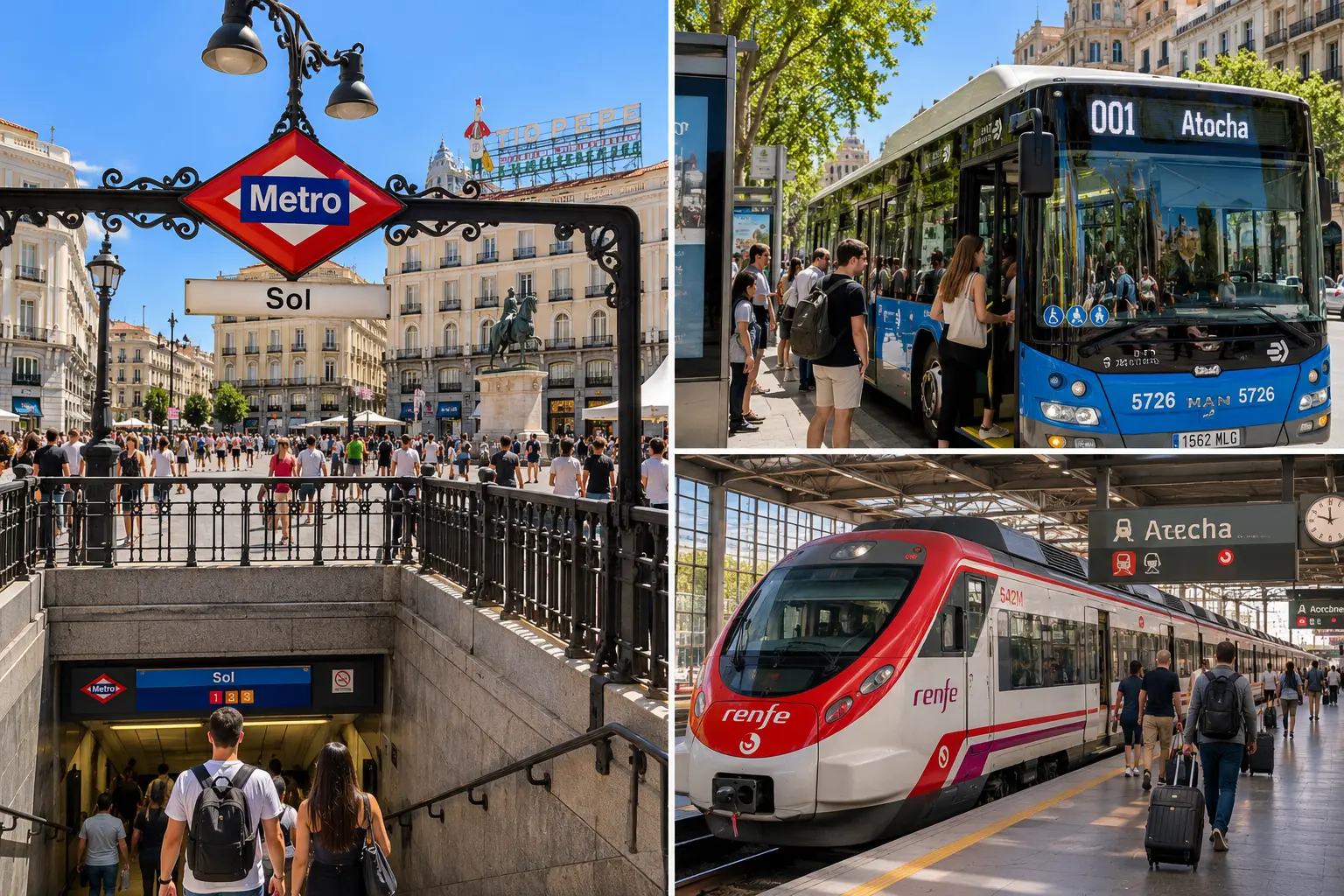
Walking Around Madrid
Best for: Historic centre, Puerta del Sol, Plaza Mayor, Royal Palace, Gran Vía, Barrio de las Letras and first-time sightseeing.
Walking is one of the most enjoyable ways to explore central Madrid, particularly around Puerta del Sol, Plaza Mayor and Madrid de los Austrias. Many historic streets, traditional squares, restaurants and shopping areas are connected by convenient pedestrian routes. Barrio de las Letras, Gran Vía and the Royal Palace district are also practical to explore on foot, allowing visitors to experience the city’s architecture and neighborhood atmosphere between attractions.
HOTEL PLANNING TIP
Choose accommodation around Puerta del Sol, Gran Vía or Barrio de las Letras if you want to minimize transport and explore many of Madrid’s major attractions on foot.
RECOMMENDED GUIDES
Best Hotels in Madrid City Centre →
Best Hotels Near Puerta del Sol, Madrid →
Best Hotels in Barrio de las Letras, Madrid →
Madrid Metro
Best for: Fast cross-city journeys, Santiago Bernabéu Stadium, shopping districts, railway stations, airport connections and travelers staying outside the historic centre.
Madrid’s Metro is one of the most practical ways to travel between neighborhoods and attractions that are too far apart to explore comfortably on foot. Its extensive network connects central areas with Salamanca, Chamartín, the Santiago Bernabéu Stadium and many residential districts. Metro Line 8 also provides connections between Nuevos Ministerios and Madrid-Barajas Airport. The system is particularly useful for travelers who want the flexibility to stay outside the busiest tourist streets while maintaining convenient access to central sightseeing.
HOTEL PLANNING TIP
If you stay outside Madrid’s historic centre, prioritize a hotel near a useful Metro station and check whether your main sightseeing routes require transfers. Confirm current ticket options, accessibility and any temporary service changes before traveling.
RECOMMENDED GUIDES
Best Hotels Near Santiago Bernabéu Stadium, Madrid →
Best Hotels in Salamanca, Madrid →
Best Hotels Near Madrid Chamartín Station →
Compare Metro-connected Madrid hotels →
Madrid City Buses
Best for: Neighborhood sightseeing, shorter urban journeys, surface transport, local attractions and routes not directly served by Metro.
Madrid’s extensive EMT bus network provides a useful alternative to the Metro, particularly for journeys between neighborhoods and attractions where a direct surface route is more convenient. Buses allow travelers to see the city at street level while moving between historic districts, residential areas and major transport connections. Madrid also operates night-bus services, making buses worth considering for some late-evening journeys when regular Metro services are unavailable.
HOTEL PLANNING TIP
A hotel near a convenient bus route can offer excellent transport flexibility, especially in Retiro, Salamanca or quieter residential neighborhoods. Check the actual route and evening service rather than relying only on the distance to the nearest bus stop.
RECOMMENDED GUIDES
Best Hotels Near Retiro Park, Madrid →
Best Hotels in Salamanca, Madrid →
Best Value Hotels in Madrid →
Cercanías and Railway Connections
Best for: Atocha, Chamartín, day trips, regional travel, high-speed rail connections and travelers visiting other Spanish destinations.
Madrid’s railway network is particularly useful for visitors combining the capital with other destinations in Spain. Cercanías commuter trains connect major stations and surrounding towns, while high-speed and long-distance services provide access to cities such as Toledo, Segovia, Barcelona, Valencia and Seville. Atocha and Chamartín are Madrid’s two principal railway hubs, but their routes and operators differ. Travelers planning day trips or onward journeys should always confirm the departure station shown on their tickets.
HOTEL PLANNING TIP
Stay near Atocha if museum sightseeing and rail connections are important, or consider Chamartín for journeys departing from northern Madrid. Compare your specific train routes before choosing accommodation, especially if you have an early departure or substantial luggage.
RECOMMENDED GUIDES
Best Hotels Near Madrid Atocha Station →
Best Hotels Near Madrid Chamartín Station →
Best Hotels Near Prado Museum, Madrid →
Taxis and Ride-Hailing Services
Best for: Airport transfers, luggage, late arrivals, families, business travel and convenient door-to-door journeys.
Official Madrid taxis and licensed ride-hailing services provide convenient alternatives when public transport is less practical. They are particularly useful for travelers arriving with heavy luggage, families requiring direct transfers and visitors returning to their hotels late in the evening. Taxis can also simplify journeys between accommodation and transport hubs, although traffic around busy central streets may make the Metro quicker at certain times. Fares, pickup arrangements and vehicle availability depend on the journey and service selected.
HOTEL PLANNING TIP
If you are traveling with children, heavy luggage or mobility requirements, check hotel vehicle access and transfer arrangements before arrival. Some accommodation in Madrid’s pedestrianized historic streets may require a short walk from the nearest convenient drop-off point.
RECOMMENDED GUIDES
Best Hotels Near Madrid Airport →
Best Family Hotels in Madrid →
Best Hotels in Madrid City Centre →
Cycling and BiciMAD
Best for: Confident cyclists, longer stays, Madrid Río, parks, neighborhood exploration and independent sightseeing.
Cycling offers another way to explore Madrid, especially for visitors who want to discover parks, riverside areas and neighborhoods beyond the historic centre. The city’s BiciMAD electric bike-sharing system provides access to bicycles through docking stations across Madrid, while private rental services and guided cycling tours offer additional options. Madrid Río is particularly attractive for recreational cycling, although busy roads, traffic conditions and street gradients make route planning important.
HOTEL PLANNING TIP
For a short first-time visit, walking and public transport will usually be simpler than cycling. Consider bicycle-friendly locations or convenient rental access if you are staying longer and want to explore Madrid Río, parks and neighborhoods beyond the central sightseeing district.
RECOMMENDED GUIDES
Best Hotels Near Retiro Park, Madrid →
Best Family Hotels in Madrid →
Best Hotels in Madrid →
Madrid Airport Transfers
Best for: Airport arrivals, early departures, overnight stopovers, business travel, short stays and visitors with luggage.
Adolfo Suárez Madrid-Barajas Airport offers several transport options for reaching the city. Metro Line 8 connects the airport with Nuevos Ministerios, while Cercanías trains serve Terminal 4 and provide connections through major railway stations. The Airport Express bus operates around the clock, and official taxis offer convenient door-to-door transfers. Your best option depends on the arrival terminal, hotel location, luggage and flight schedule. Metro journeys to airport stations may require an additional airport supplement depending on the ticket used.
HOTEL PLANNING TIP
For an early departure, late arrival or overnight connection, compare hotels near Madrid Airport with accommodation around major transport hubs. For a longer sightseeing holiday, staying in central Madrid will usually be more convenient than traveling into the city from the airport every day.
RECOMMENDED GUIDES
Best Hotels Near Madrid Airport →
Best Hotels Near Madrid Chamartín Station →
Best Hotels Near Madrid Atocha Station →
Best Time to Visit Madrid
The best time to visit Madrid depends on whether you prefer comfortable sightseeing weather, outdoor cafés, cultural attractions, festivals, Christmas celebrations or better hotel value. Madrid is a year-round destination, but its hot summers, cooler winters and lively seasonal events can significantly influence your experience. Choosing the right travel period can make exploring the Royal Palace, Prado Museum, Retiro Park and historic neighborhoods considerably more enjoyable.
For most first-time visitors, spring and early autumn offer the best overall balance of pleasant walking conditions, outdoor activities and cultural sightseeing. Summer brings long evenings, rooftop bars and major festivals but can be extremely hot, while winter is particularly appealing for museums, traditional restaurants and festive city breaks. Hotel prices also vary with major events, public holidays and demand, so comparing accommodation for your actual dates is essential.
Compare Madrid hotel guides →
Spring in Madrid
Best for: First-time visitors, comfortable sightseeing, palace gardens, couples, outdoor cafés, walking, festivals and cultural city breaks.
Spring is one of the most attractive seasons to explore Madrid, particularly from April to May when parks and gardens become greener and temperatures are generally more comfortable for walking. Retiro Park, the Royal Botanical Garden and Madrid’s historic squares are especially appealing, while outdoor terraces create a lively atmosphere throughout the city. Spring also brings major cultural events and traditional celebrations, including the San Isidro festivities around 15 May. Occasional rain and warmer late-spring afternoons are worth considering when planning longer sightseeing days.
HOTEL PLANNING TIP
Spring is an excellent time to stay in Madrid City Centre, Barrio de las Letras or near Retiro Park. Book ahead for popular weekends and major events, particularly if you want a specific boutique hotel or centrally located accommodation.
RECOMMENDED GUIDES
Best Hotels for First-Time Visitors in Madrid →
Best Hotels Near Retiro Park, Madrid →
Best Hotels in Barrio de las Letras, Madrid →
Summer in Madrid
Best for: Rooftop bars, long evenings, nightlife, outdoor dining, festivals, shopping and travelers comfortable with hot weather.
Summer in Madrid is energetic, sunny and often extremely hot, especially during July and August when daytime temperatures can exceed 35°C. Outdoor sightseeing is generally more comfortable in the morning or evening, while the hottest hours are better spent in museums, air-conditioned attractions or relaxing at the hotel. Gran Vía, Chueca and Malasaña are particularly lively after sunset, with rooftop venues and restaurants offering attractive evening experiences. Summer also brings Madrid Pride and cultural festivals, although some smaller local businesses may close for holidays in August.
HOTEL PLANNING TIP
Prioritize air conditioning and convenient transport connections when choosing a summer hotel. Properties with swimming pools or attractive rooftop facilities can make hot afternoons more comfortable, while staying centrally helps reduce unnecessary travel between attractions.
RECOMMENDED GUIDES
Best Hotels with Pools in Madrid →
Best Hotels Near Gran Vía, Madrid →
Best Hotels in Chueca, Madrid →
Autumn in Madrid
Best for: Cultural sightseeing, museums, couples, food experiences, Retiro Park, walking, photography and relaxed city breaks.
Autumn is another excellent period to visit Madrid, particularly in September and October when temperatures are often more comfortable than during the summer months. The changing colors of Retiro Park create an attractive setting for walks, while the Prado Museum, Royal Palace and Barrio de las Letras are enjoyable to explore without the intense summer heat. Madrid’s restaurants, theaters and cultural venues also provide plenty of opportunities for evening entertainment. November is generally cooler and can be wetter, making indoor museums and traditional cafés especially appealing.
HOTEL PLANNING TIP
For an autumn city break, compare Barrio de las Letras, Retiro and Salamanca alongside the historic centre. These areas offer convenient combinations of museums, elegant streets, restaurants and seasonal sightseeing.
RECOMMENDED GUIDES
Best Hotels Near Prado Museum, Madrid →
Best Boutique Hotels in Madrid →
Best Hotels in Salamanca, Madrid →
Winter in Madrid
Best for: Christmas lights, museums, shopping, traditional restaurants, couples, festive city breaks and indoor cultural attractions.
Winter in Madrid brings colder temperatures but plenty of opportunities for memorable sightseeing. December is especially atmospheric, with Christmas decorations, festive shopping and seasonal activities around central squares and shopping streets. The Royal Palace, Prado Museum and other indoor attractions remain excellent choices, while traditional cafés and restaurants provide welcoming breaks between sightseeing stops. January and February are generally quieter outside major events, although evenings can be cold and shorter daylight hours make thoughtful itinerary planning particularly useful.
HOTEL PLANNING TIP
Choose Madrid City Centre or Gran Vía if you want convenient access to Christmas shopping, restaurants and major attractions. For quieter winter stays, compare Barrio de las Letras and Salamanca while prioritizing comfortable accommodation and useful transport connections.
RECOMMENDED GUIDES
Best Hotels in Madrid City Centre →
Best Hotels Near Gran Vía, Madrid →
Best Luxury Hotels in Madrid →
Best Time for Better Hotel Value
Best for: Budget-conscious travelers, flexible dates, longer stays, affordable accommodation and visitors prioritizing hotel quality over peak-season atmosphere.
Madrid hotel prices can vary considerably throughout the year, depending on major events, business travel, public holidays and seasonal demand. Some periods in January and February, outside major events, may offer attractive opportunities to compare hotel value. Selected dates during the hottest summer weeks can also be worth checking, although higher temperatures may make sightseeing less comfortable. There is no consistently cheapest month for every hotel, so flexibility and comparing several neighborhoods are often more useful than relying on general seasonal price assumptions.
HOTEL PLANNING TIP
Compare hotels around Atocha, Barrio de las Letras, Chamberí and selected central streets rather than automatically choosing accommodation far from the main attractions. A well-located hotel can provide better overall value by reducing transport time and improving sightseeing convenience.
RECOMMENDED GUIDES
Best Value Hotels in Madrid →
Best Cheap Hotels in Madrid →
Best Hotels Near Madrid Atocha Station →
Best Time for Events and Seasonal Experiences
Best for: Festivals, Madrid Pride, San Isidro celebrations, football matches, concerts, cultural events, shopping and special-interest travel.
Madrid hosts major cultural, sporting and seasonal events throughout the year, creating excellent opportunities for travelers who want experiences beyond traditional sightseeing. Spring brings the San Isidro celebrations, international sporting events and cultural festivals, while summer features Madrid Pride and outdoor entertainment. Autumn offers a lively cultural calendar, and the Christmas season transforms central Madrid with festive lights and celebrations. Football matches at the Santiago Bernabéu Stadium, major concerts and exhibitions at IFEMA Madrid can also influence hotel demand throughout the year.
HOTEL PLANNING TIP
For event-focused trips, choose accommodation according to the venue and transport connections rather than simply staying in the historic centre. Book early for major festivals, football matches, concerts and trade fairs, and confirm the official event dates before finalizing your hotel reservation.
RECOMMENDED GUIDES
Best Hotels Near Santiago Bernabéu Stadium, Madrid →
Best Hotels Near IFEMA Madrid →
Best Hotels in Madrid City Centre →
Best Tours and Experiences in Madrid
Madrid is easy to explore independently, but the right guided tour can add valuable historical context, simplify visits to major attractions and introduce you to experiences you might otherwise overlook. From the Royal Palace and Prado Museum to traditional tapas neighborhoods and football history, the city offers a wide range of activities for first-time visitors, couples, families and cultural travelers.
For most visitors, the best tours and experiences in Madrid include a historic city walking tour, a guided visit to the Royal Palace, a Prado Museum art tour, a traditional tapas and food experience, a Santiago Bernabéu Stadium tour and a day trip to Toledo or Segovia. Choosing experiences that match your interests and itinerary will help you enjoy Madrid without spending unnecessary time traveling between unrelated attractions.
Compare Madrid tours and tickets →
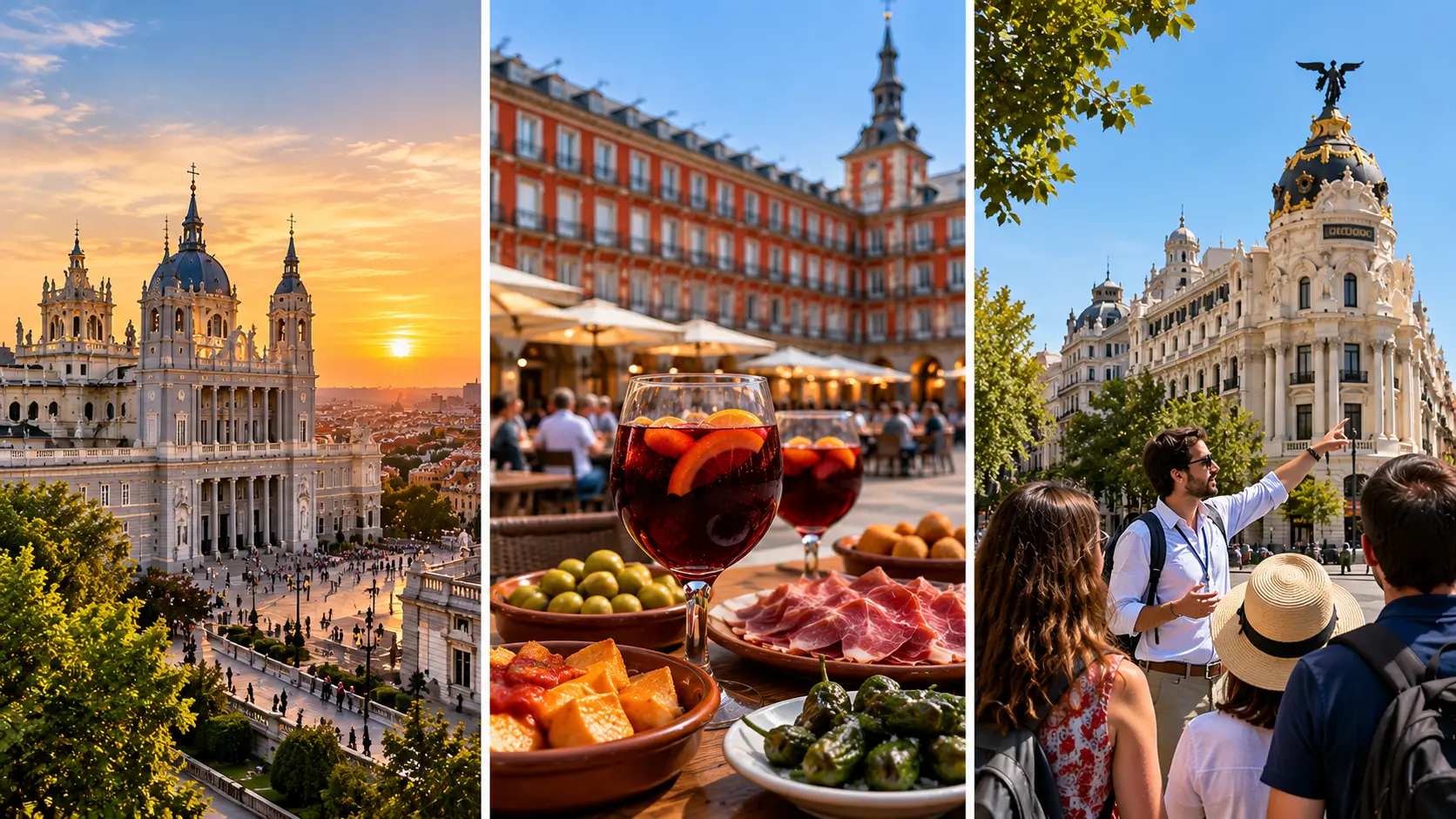
Madrid Historic City Walking Tours
Best for: First-time visitors, Spanish history, architecture, royal landmarks, couples, cultural sightseeing and exploring on foot.
A guided walking tour through Madrid’s historic centre is one of the easiest ways to understand the city’s royal heritage, architecture and traditional neighborhoods. Many routes explore Puerta del Sol, Plaza Mayor, Madrid de los Austrias and the streets surrounding the Royal Palace, connecting famous landmarks with lesser-known squares and local stories. Walking tours are particularly useful at the beginning of a trip, helping visitors become familiar with central Madrid while discovering places worth revisiting independently.
BOOKING TIP
Choose a walking tour that focuses on a compact historic route rather than trying to cover the entire city in a few hours. Check the meeting point, language, group size and whether the itinerary includes attraction interiors or exterior sightseeing only.
RECOMMENDED GUIDES
Best Hotels in Madrid City Centre →
Best Hotels Near Puerta del Sol, Madrid →
Best Hotels Near Plaza Mayor, Madrid →
Explore Madrid historic walking tours →
Royal Palace of Madrid Tours
Best for: Royal history, architecture, first-time visitors, couples, historic interiors, cultural sightseeing and guided palace visits.
A guided tour of the Royal Palace of Madrid offers an opportunity to discover the history of Spain’s monarchy while exploring one of the city’s most impressive architectural landmarks. The palace is celebrated for its magnificent ceremonial rooms, elegant interiors and royal collections, with knowledgeable guides providing historical context that can make the experience more rewarding. Its location near Almudena Cathedral and Plaza de Oriente also makes it easy to combine a palace visit with a wider exploration of Madrid de los Austrias.
BOOKING TIP
Reserve your preferred admission time in advance, particularly during popular travel periods. Compare official guided visits, independent admission and third-party tours carefully, checking whether palace entrance tickets are included. Opening arrangements and accessible rooms may change because of official events.
RECOMMENDED GUIDES
Best Hotels Near Plaza Mayor, Madrid →
Best Luxury Hotels in Madrid →
Best Hotels in Madrid City Centre →
Prado Museum Guided Tours
Best for: Art lovers, European painting, Spanish masters, cultural sightseeing, couples, first-time visitors and museum experiences.
A guided tour of the Prado Museum is one of Madrid’s most rewarding cultural experiences, particularly for visitors who want to understand the significance of its world-famous art collection. The museum is celebrated for masterpieces by Velázquez, Goya, El Greco and other influential European artists. A knowledgeable guide can help visitors focus on important paintings, explain their historical background and navigate the extensive galleries without feeling overwhelmed. This experience works particularly well for travelers with limited time or a special interest in Spanish art.
BOOKING TIP
Compare guided tours according to their duration, language, group size and admission arrangements. Confirm that the experience includes entry to the Prado Museum, and allow additional time afterwards if you want to explore other galleries independently.
RECOMMENDED GUIDES
Best Hotels Near Prado Museum, Madrid →
Best Hotels in Barrio de las Letras, Madrid →
Best Luxury Hotels in Madrid →
Madrid Food and Tapas Tours
Best for: Food lovers, couples, traditional tapas, local markets, Spanish cuisine, neighborhood exploration and evening experiences.
A food and tapas tour is one of the most enjoyable ways to experience Madrid beyond its headline attractions. Guided experiences often explore traditional taverns, neighborhood restaurants and local markets, introducing visitors to Spanish culinary traditions alongside the stories behind different districts. La Latina is especially popular for its historic tapas streets, while Barrio de las Letras offers atmospheric restaurants and Lavapiés adds a more multicultural dining experience. Food tours work particularly well for couples, small groups and travelers who want to combine sightseeing with memorable local cuisine.
BOOKING TIP
Prioritize experiences that focus on a specific neighborhood or culinary theme rather than visiting unrelated restaurants across the city. Check how many food stops and tastings are included, whether drinks are covered and whether dietary requirements can be accommodated before booking.
RECOMMENDED GUIDES
Best Hotels in Madrid City Centre →
Best Hotels in Barrio de las Letras, Madrid →
Best Hotels in Chueca, Madrid →
Santiago Bernabéu Stadium Experiences
Best for: Football fans, Real Madrid supporters, families, sporting history, stadium architecture and memorable sports experiences.
A Santiago Bernabéu Stadium tour is one of Madrid’s standout experiences for football enthusiasts and visitors interested in the history of Real Madrid. The stadium’s visitor experience includes the club museum, displays celebrating its sporting achievements and opportunities to discover the venue from different perspectives. Selected tour options provide access to additional stadium areas, depending on operational arrangements. This experience is particularly attractive for families, football supporters and travelers who want to include a major sporting landmark alongside Madrid’s traditional cultural attractions.
BOOKING TIP
Check the official Bernabéu Tour schedule and the exact areas included before reserving. Tour routes and opening arrangements may change around football matches, concerts and other stadium events, while access to certain facilities is not guaranteed on every date.
RECOMMENDED GUIDES
Best Hotels Near Santiago Bernabéu Stadium, Madrid →
Best Hotels Near Madrid Chamartín Station →
Best Family Hotels in Madrid →
Day Trips from Madrid
Best for: Longer stays, historic cities, UNESCO World Heritage Sites, architecture, cultural excursions and travelers exploring central Spain.
Madrid is an excellent base for discovering some of central Spain’s most remarkable historic destinations. Toledo is particularly appealing for its medieval streets, cathedral and multicultural heritage, while Segovia is famous for its Roman aqueduct, Alcázar and historic old town. Aranjuez offers another attractive excursion with its Royal Palace and gardens. Guided day trips can simplify transport and sightseeing arrangements, especially for travelers who prefer an organized experience rather than planning railway connections and attraction visits independently.
BOOKING TIP
For a first visit of only two or three days, prioritize Madrid’s main attractions before adding an excursion. With four or five days or more, consider a dedicated day trip to Toledo or Segovia. Compare single-destination tours with combined excursions, as visiting several historic cities in one day can leave limited time for independent exploration.
RECOMMENDED GUIDES
Best Hotels Near Madrid Atocha Station →
Best Hotels Near Madrid Chamartín Station →
Best Hotels in Madrid City Centre →
Where to Eat and Drink in Madrid
Madrid’s food scene is one of the most rewarding parts of visiting the Spanish capital, combining traditional tapas bars, historic taverns, lively food markets, contemporary restaurants and sophisticated dining. The best places to eat and drink in Madrid depend on whether you want classic Spanish cuisine, atmospheric neighborhood restaurants, creative food experiences or elegant dining after a day of sightseeing.
For most visitors, Madrid’s historic centre is ideal for traditional restaurants and famous food markets, while La Latina is especially appealing for tapas and local atmosphere. Barrio de las Letras combines historic streets with excellent dining, Chueca and Malasaña offer fashionable restaurants and nightlife, Chamberí is popular for neighborhood dining, and Salamanca stands out for upscale restaurants. Lavapiés is another worthwhile area for multicultural cuisine and independent food establishments.
Compare food-friendly Madrid hotel areas →
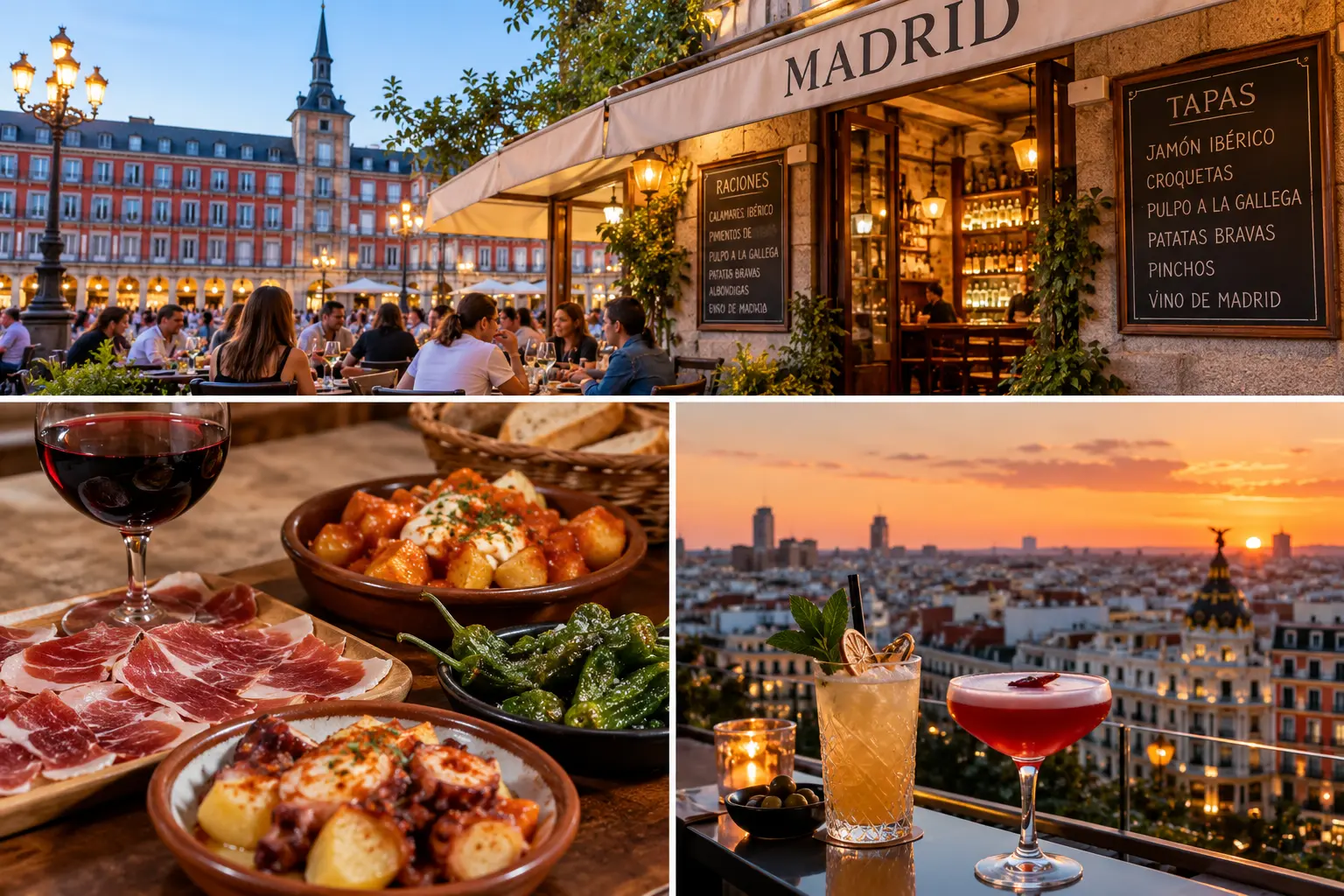
Madrid Historic Centre and Traditional Dining
Best for: First-time visitors, traditional Spanish cuisine, historic restaurants, food markets, tapas, sightseeing convenience and classic Madrid experiences.
Madrid’s historic centre offers an excellent introduction to the city’s traditional food culture, particularly around Puerta del Sol, Plaza Mayor and Madrid de los Austrias. Visitors can explore long-established taverns, enjoy a classic bocadillo de calamares near Plaza Mayor or discover the gourmet food stalls of Mercado de San Miguel. The surrounding streets also offer traditional restaurants, cafés and historic establishments serving familiar Madrid specialties, making this area especially convenient for combining sightseeing with food experiences.
HOTEL PLANNING TIP
Stay around Puerta del Sol, Plaza Mayor or Gran Vía if you want traditional restaurants, food markets and historic attractions within walking distance. Compare restaurant menus and prices carefully, particularly around heavily visited tourist squares.
RECOMMENDED GUIDES
Best Hotels in Madrid City Centre →
Best Hotels Near Puerta del Sol, Madrid →
Best Hotels Near Plaza Mayor, Madrid →
La Latina and Traditional Tapas Streets
Best for: Traditional tapas, food lovers, historic taverns, wine bars, local atmosphere, couples and weekend dining.
La Latina is one of Madrid’s most famous neighborhoods for tapas, offering atmospheric streets, traditional bars and lively squares that are particularly appealing for relaxed meals and evening dining. Calle de Cava Baja is the area’s best-known restaurant street, while Plaza de la Cebada and nearby historic squares provide additional opportunities to experience Madrid’s traditional food culture. The neighborhood becomes especially lively on weekends, when visitors combine the famous El Rastro market with tapas, local restaurants and social gatherings.
HOTEL PLANNING TIP
Choose accommodation in La Latina or the nearby historic centre if traditional tapas bars and evening restaurant visits are important to your trip. Streets around Cava Baja can become lively, so compare hotel locations and room orientation if you prefer quieter nights.
RECOMMENDED GUIDES
Best Hotels in Madrid City Centre →
Best Hotels Near Plaza Mayor, Madrid →
Best Value Hotels in Madrid →
Barrio de las Letras and Plaza de Santa Ana
Best for: Couples, traditional taverns, tapas, boutique hotels, atmospheric restaurants, art museums and cultural sightseeing.
Barrio de las Letras combines Madrid’s literary heritage with one of its most appealing central dining areas. The streets surrounding Plaza de Santa Ana, Calle de Huertas and Calle del León feature traditional taverns, contemporary restaurants, cafés and welcoming terraces. The neighborhood is especially attractive for visitors who want to enjoy Spanish cuisine in a historic setting while remaining close to the Prado Museum, Thyssen-Bornemisza Museum and the city’s central attractions. Its combination of cultural sightseeing and restaurants makes it particularly suitable for couples and relaxed city breaks.
HOTEL PLANNING TIP
Stay in Barrio de las Letras if you want to combine art museums, historic streets and excellent dining without relying heavily on public transport. Hotels around Plaza de Santa Ana offer convenient restaurant access, although some nearby streets can become lively during evenings.
RECOMMENDED GUIDES
Best Hotels in Barrio de las Letras, Madrid →
Best Hotels Near Prado Museum, Madrid →
Best Boutique Hotels in Madrid →
Chueca and Malasaña
Best for: Trendy restaurants, cocktail bars, international cuisine, independent cafés, nightlife, creative culture and lively evenings.
Chueca and Malasaña are among Madrid’s most exciting neighborhoods for contemporary dining and nightlife. Chueca offers fashionable restaurants, international cuisine, cocktail bars and Mercado de San Antón, while Malasaña combines traditional taverns with creative cafés, casual dining and independent establishments. The streets around Plaza de Chueca, Calle de Fuencarral and Plaza del Dos de Mayo provide a wide variety of places to eat and drink, making these neighborhoods especially attractive for couples and travelers who enjoy exploring Madrid’s social scene after dark.
HOTEL PLANNING TIP
Choose Chueca or Malasaña if restaurants, cafés and nightlife are central to your Madrid experience. Both neighborhoods offer excellent access to Gran Vía, but popular nightlife streets can remain active late into the evening.
RECOMMENDED GUIDES
Best Hotels in Chueca, Madrid →
Best Hotels in Malasaña, Madrid →
Best Boutique Hotels in Madrid →
Chamberí and Calle de Ponzano
Best for: Local restaurants, traditional tapas, neighborhood cafés, couples, repeat visitors, longer stays and relaxed dining.
Chamberí offers an appealing alternative to Madrid’s busiest tourist dining areas, combining elegant residential streets with traditional restaurants, contemporary food establishments and lively neighborhood cafés. Calle de Ponzano is particularly well known for its concentration of tapas bars and restaurants, while Plaza de Olavide provides attractive terraces and a relaxed setting for drinks or casual meals. The district is especially rewarding for repeat visitors and travelers who want to experience Madrid’s everyday dining culture while remaining conveniently connected to the historic centre.
HOTEL PLANNING TIP
Consider Chamberí for a longer stay if neighborhood restaurants, cafés and a more residential atmosphere matter more than immediate proximity to major tourist landmarks. Accommodation around Almagro and Alonso Martínez can offer convenient access to both central Madrid and Chamberí’s dining areas.
RECOMMENDED GUIDES
Best Hotels in Madrid →
Best Boutique Hotels in Madrid →
Best Luxury Hotels in Madrid →
Salamanca and Retiro
Best for: Fine dining, elegant restaurants, luxury travelers, couples, sophisticated cafés, special occasions and relaxed cultural sightseeing.
Salamanca is one of Madrid’s strongest neighborhoods for refined dining, offering elegant restaurants, stylish cafés and upscale culinary experiences around Calle de Serrano, Calle de Velázquez and the surrounding Golden Mile. Mercado de la Paz adds a traditional market atmosphere to the district’s sophisticated food scene. Nearby Retiro and Jerónimos provide attractive options for combining lunch or dinner with a visit to Retiro Park, the Prado Museum or Madrid’s elegant cultural landmarks. Together, these areas are particularly appealing for couples and travelers who prefer a polished dining experience.
HOTEL PLANNING TIP
Choose Salamanca if fine dining, luxury shopping and sophisticated restaurants are important parts of your trip. Stay near Retiro or Jerónimos if you prefer combining museum visits, park walks and relaxed meals in elegant surroundings.
RECOMMENDED GUIDES
Best Hotels in Salamanca, Madrid →
Best Hotels Near Retiro Park, Madrid →
Best Luxury Hotels in Madrid →
Essential Madrid Travel Tips
Madrid is a rewarding city to explore, but a few practical decisions can make your trip considerably easier. Choosing the right neighborhood, planning attractions by location, understanding public transport and allowing for the city’s seasonal weather can help you enjoy more of the Spanish capital without unnecessary travel or expense.
These essential Madrid travel tips will help you organize sightseeing, compare accommodation, book major attractions and make the most of your time in the city. Whether you are planning your first Madrid city break, a family holiday or a longer stay, thoughtful preparation can improve both convenience and overall travel value.
Choose Your Hotel Area Before Choosing the Hotel
Best for: First-time visitors, couples, families, short city breaks and travelers comparing Madrid neighborhoods.
Your hotel location will influence how easily you can reach Madrid’s main attractions, restaurants and entertainment districts. A well-reviewed hotel in the wrong neighborhood may require unnecessary transport, while accommodation near your preferred sights can make daily planning significantly easier. The most important decision is to match your hotel area to your sightseeing priorities, rather than choosing a property based only on its rating or photographs.
PLANNING TIP
Choose Puerta del Sol or Gran Vía for central sightseeing, Barrio de las Letras for art and historic character, Salamanca for luxury shopping, Retiro for families, and Chueca or Malasaña for nightlife. Compare the exact hotel location before booking.
RECOMMENDED GUIDES
Where to Stay in Madrid: Best Areas & Hotels →
Best Hotels in Madrid →
Best Hotels for First-Time Visitors in Madrid →
Book Major Attractions and Experiences in Advance
Best for: Royal Palace visits, Prado Museum, Santiago Bernabéu Stadium, guided tours, football matches and short trips.
Madrid’s most popular attractions can attract substantial demand, particularly during weekends, public holidays and major events. Booking important experiences in advance can help you secure a suitable visiting time and organize your itinerary more efficiently. This is especially valuable when visiting the Royal Palace, Prado Museum or Santiago Bernabéu Stadium, where admission arrangements and available experiences may vary. Prioritize reservations for attractions you do not want to miss before organizing less time-sensitive activities.
PLANNING TIP
Compare official admission tickets and guided tours before purchasing. Check the date, entry time, cancellation conditions and included activities, and remember that stadium tours or palace visits may be affected by events and operational changes.
RECOMMENDED GUIDES
Best Hotels Near Prado Museum, Madrid →
Best Hotels Near Santiago Bernabéu Stadium, Madrid →
Best Hotels Near Plaza Mayor, Madrid →
Plan Each Sightseeing Day by Neighborhood
Best for: First-time visitors, families, walking itineraries, short trips, museums and efficient sightseeing.
Madrid’s historic centre is relatively compact, but some major attractions and neighborhoods are farther apart than they initially appear on a map. Repeatedly traveling between the Royal Palace, Prado Museum, Santiago Bernabéu Stadium and outer districts can make a sightseeing day unnecessarily tiring. A more efficient approach is to group nearby attractions into one sightseeing area, leaving enough time for restaurants, museums and relaxed neighborhood exploration.
PLANNING TIP
Combine Puerta del Sol, Plaza Mayor and the Royal Palace; visit the Prado Museum with Retiro Park and Barrio de las Letras; explore Gran Vía with Chueca or Malasaña; and plan Santiago Bernabéu separately if it is a major priority.
RECOMMENDED GUIDES
Best Hotels in Madrid City Centre →
Best Hotels Near Prado Museum, Madrid →
Best Hotels Near Gran Vía, Madrid →
Use Walking and Public Transport Together
Best for: City sightseeing, first-time visitors, families, travelers without a car and accommodation outside the historic centre.
Madrid has an extensive public transport network, making it straightforward to explore the city without renting a vehicle. Walking is ideal for historic streets and central attractions, while the Metro, city buses and Cercanías trains provide convenient connections to other districts and transport hubs. For most visitors, walking combined with the Metro offers an excellent balance of convenience and flexibility. Ticket options and accessibility vary, so checking the most useful routes before arrival can prevent unnecessary transfers.
PLANNING TIP
Choose a hotel near the attractions you expect to visit most frequently or within easy reach of a useful Metro station. Compare individual tickets and multi-journey options according to your itinerary, and check accessibility arrangements when traveling with strollers or mobility requirements.
RECOMMENDED GUIDES
Best Hotels in Madrid City Centre →
Best Hotels Near Madrid Atocha Station →
Best Value Hotels in Madrid →
Check Your Airport and Railway Connections Before Arrival
Best for: Airport arrivals, early departures, railway travelers, day trips, business travel and visitors with luggage.
Madrid has several major transport hubs, and the most convenient transfer depends on your hotel location and travel arrangements. Adolfo Suárez Madrid-Barajas Airport is connected to the city by Metro, rail, buses and taxis, while Atocha and Chamartín serve different railway routes. Before traveling, confirm your arrival terminal, departure station and onward connections, especially when planning an early train or flight. Airport Metro journeys may also require a supplement depending on the ticket selected.
PLANNING TIP
For a sightseeing holiday, compare central accommodation with convenient airport connections. Stay near Atocha or Chamartín when railway travel is a major priority, or consider an airport hotel for a very early flight, late arrival or overnight stopover.
RECOMMENDED GUIDES
Best Hotels Near Madrid Airport →
Best Hotels Near Madrid Atocha Station →
Best Hotels Near Madrid Chamartín Station →
Compare Madrid hotels near transport hubs →
Stay Safe in Madrid and Protect Your Belongings
Best for: First-time visitors, solo travelers, families, public transport, crowded attractions, shopping streets and practical travel safety.
Madrid is generally a welcoming destination, but visitors should take sensible precautions in crowded tourist areas, busy transport stations and popular shopping streets. Pickpocketing and opportunistic theft can occur around Puerta del Sol, Gran Vía, Plaza Mayor and major railway stations, particularly when travelers are distracted. Keep bags closed, avoid leaving phones or wallets unattended in restaurants and remain aware of your belongings on public transport. Taking simple precautions in crowded places can help you explore Madrid with greater confidence.
HOTEL PLANNING TIP
Keep valuable documents and unnecessary cash securely stored, carry only what you need for the day and save digital copies of important travel documents. If you experience an emergency, call 112. Choose accommodation with convenient transport access and secure luggage storage, particularly when arriving early or departing late.
RECOMMENDED GUIDES
Best Hotels in Madrid City Centre →
Best Hotels Near Puerta del Sol, Madrid →
Best Hotels Near Madrid Atocha Station →
Compare centrally located Madrid hotels →
Prepare for Madrid’s Weather and Daily Rhythm
Best for: Summer sightseeing, winter city breaks, families, outdoor activities, restaurant visits and comfortable travel.
Madrid experiences hot summers, cooler winters and generally more comfortable walking conditions during spring and autumn. Summer afternoons can become particularly hot, making museums and indoor attractions attractive during the warmest hours. The city’s social and dining culture also tends to extend later into the evening than in some other European capitals. During warmer months, prioritize comfortable walking conditions and air-conditioned accommodation, particularly when planning several days of sightseeing.
PLANNING TIP
Plan outdoor attractions and longer walks for the morning or evening during hot weather. Carry water, wear comfortable shoes and check seasonal opening hours. In winter, bring suitable layers for colder evenings and allow additional time for indoor museums and cafés.
RECOMMENDED GUIDES
Best Hotels with Pools in Madrid →
Best Hotels Near Retiro Park, Madrid →
Best Hotels in Madrid City Centre →
Compare Madrid hotels by season →
Balance Hotel Location, Price and Overall Value
Best for: Budget-conscious travelers, families, couples, longer stays and visitors comparing different accommodation categories.
The cheapest hotel is not always the best choice for a Madrid trip. A central property may cost more per night but reduce transport time and simplify sightseeing, while accommodation in a less tourist-focused neighborhood may offer more space or better facilities. Room size, breakfast, cancellation flexibility and transport convenience can all influence the overall experience. Compare the total booking cost and the value of the location, rather than making your decision based solely on a hotel’s advertised nightly rate.
HOTEL PLANNING TIP
Compare hotels around Atocha, Barrio de las Letras and selected central streets alongside accommodation in quieter neighborhoods such as Chamberí. Check final prices, room categories, included facilities and cancellation conditions before booking.
RECOMMENDED GUIDES
Best Value Hotels in Madrid →
Best Cheap Hotels in Madrid →
Best Serviced Apartments in Madrid →
Compare best-value Madrid hotels →
Explore Madrid Hotel Guides
Planning a trip to Madrid? Explore our hotel guides to find the right accommodation for your travel style, sightseeing priorities and budget. Whether you want to stay near Puerta del Sol and Gran Vía, explore historic neighborhoods, enjoy luxury shopping in Salamanca or choose a quieter location near Retiro Park, these guides will help you compare Madrid’s most convenient areas and hotels.
Start with our Where to Stay in Madrid: Best Areas & Hotels guide for a detailed comparison of the city’s neighborhoods, or explore the hotel categories below for recommendations based on location, comfort, travel style and value. For official visitor information, consult Madrid’s tourism website, Metro de Madrid and Renfe for current attractions, public transport and railway connections.
Best Hotels in Madrid →
Where to Stay in Madrid: Best Areas & Hotels →
Best Hotels Near Puerta del Sol, Madrid →
Best Hotels Near Gran Vía, Madrid →
Best Hotels in Barrio de las Letras, Madrid →
Best Hotels Near Prado Museum, Madrid →
Best Hotels Near Retiro Park, Madrid →
Best Hotels in Chueca, Madrid →
Best Luxury Hotels in Madrid →
Best Family Hotels in Madrid →
Best Value Hotels in Madrid →
Best Hotels Near Madrid Atocha Station →
FAQs About Planning a Trip to Madrid
Planning a trip to Madrid? These frequently asked questions cover the best things to do, where to stay, how many days you need, public transport, airport transfers, seasonal weather, food, safety and day trips. Whether you are visiting Spain’s capital for the first time or returning for a longer stay, these practical answers will help you organize a more enjoyable Madrid itinerary.
Where should I stay in Madrid for the first time?
For most first-time visitors, Puerta del Sol and Gran Vía are the most convenient areas because they provide excellent access to historic attractions, restaurants, shopping and public transport. Barrio de las Letras is another strong choice for travelers interested in museums and atmospheric streets, while Retiro offers a more relaxed setting near parks and cultural landmarks. Explore our Where to Stay in Madrid guide for a detailed comparison of neighborhoods and recommended hotels.
How many days do you need in Madrid?
For most first-time visitors, 3 to 4 days in Madrid is ideal. This gives you enough time to explore the Royal Palace, Prado Museum, Retiro Park, Gran Vía and the historic centre while enjoying traditional restaurants and several distinctive neighborhoods. Two days can cover the main highlights, but a longer stay allows for more museums, relaxed sightseeing and potentially a day trip to Toledo or Segovia.
Is 2 days enough to visit Madrid?
Yes. Two days is enough to enjoy Madrid’s most important highlights, provided you prioritize your itinerary. Spend your first day around Puerta del Sol, Plaza Mayor, the Royal Palace and Gran Vía, then dedicate the second to the Prado Museum, Retiro Park and Barrio de las Letras. You will not see everything, but this provides an excellent introduction to the capital. Three or four days is preferable if you want more time for museums, restaurants and neighborhood exploration.
What are the best things to do in Madrid?
Madrid’s essential attractions include the Royal Palace, Plaza Mayor, Puerta del Sol, Prado Museum, Retiro Park, Gran Vía and the Reina Sofía Museum. Football fans should also consider the Santiago Bernabéu Stadium, while food lovers can explore La Latina’s traditional tapas streets and the city’s historic markets. For a balanced first visit, combine royal landmarks, art museums, outdoor spaces and time exploring neighborhoods rather than focusing exclusively on major attractions.
Is the Royal Palace of Madrid worth visiting?
Yes. The Royal Palace is one of Madrid’s most impressive historic attractions and is particularly worthwhile for visitors interested in royal history, architecture and magnificent interiors. Its ceremonial rooms and historic collections provide insight into Spain’s monarchy, while nearby Almudena Cathedral and Plaza de Oriente add to the sightseeing experience. Allow sufficient time for the palace and surrounding area, and check admission arrangements before visiting because official events can affect access.
Is the Prado Museum worth visiting?
Absolutely. The Prado Museum is one of Europe’s most important art museums, with an exceptional collection featuring Velázquez, Goya, El Greco and other influential European painters. It is especially rewarding for visitors interested in Spanish art and cultural history. You do not need to see every gallery to enjoy the experience. Focus on a selection of major artworks, consider a guided tour for additional context and combine the visit with nearby Retiro Park or Barrio de las Letras.
Is the Santiago Bernabéu Stadium tour worth it?
The Santiago Bernabéu Stadium tour is particularly worthwhile for Real Madrid supporters, football enthusiasts and families interested in sporting history. The visitor experience offers opportunities to discover the club’s achievements, museum displays and selected stadium areas. However, the available route can change depending on football matches, concerts and stadium operations. Check the official tour details before booking, especially if access to a particular part of the stadium is important to you.
Is Madrid a good destination for families?
Yes. Madrid offers a wide variety of family-friendly experiences, including Retiro Park, the Royal Palace, museums, Madrid Río and the Santiago Bernabéu Stadium. Families can also explore Casa de Campo and enjoy relaxed outdoor activities between cultural attractions. Retiro and Jerónimos are particularly attractive areas to stay because of their green spaces and museum access. For younger children, plan shorter sightseeing blocks and allow enough time for meals, parks and rest.
What is the best time to visit Madrid?
April, May, September and October are generally among the best months for visiting Madrid, offering a favorable balance of sightseeing weather, outdoor activities and cultural experiences. Spring is especially attractive for parks and gardens, while early autumn is excellent for walking and museum visits. Summer can be extremely hot, particularly in July and August, and winter brings cooler temperatures. The best choice ultimately depends on your preferred weather, travel dates and planned activities.
Is Madrid too hot to visit in summer?
Madrid can be very hot during summer, particularly in July and August when afternoon temperatures sometimes exceed 35°C. However, the city remains enjoyable with thoughtful planning. Visit outdoor attractions during the morning or evening, use the hottest hours for museums and indoor experiences, and choose accommodation with reliable air conditioning. Summer is particularly appealing for rooftop bars, nightlife and long evenings, but visitors sensitive to heat may prefer spring or autumn.
Is Madrid expensive for tourists?
Madrid can be expensive in prestigious hotel districts and at major attractions, but it offers accommodation and dining options across different budgets. Central hotels around Sol and Gran Vía may command higher prices, while selected areas around Atocha and other well-connected neighborhoods can provide better value. Public transport is generally a practical alternative to taxis, and casual restaurants and traditional tapas bars offer different spending options. Compare total accommodation costs and travel dates rather than assuming one neighborhood is always cheapest.
Is Madrid safe for tourists?
Madrid is generally a safe destination for visitors, although sensible precautions are important in crowded tourist areas and transport hubs. Pickpocketing and opportunistic theft can occur around popular attractions, shopping streets, railway stations and busy Metro services. Keep bags secure, avoid leaving valuables unattended and remain aware of your belongings in crowded places. Most travelers can explore the city comfortably by following ordinary urban safety precautions. For emergencies in Spain, call 112.
What is the easiest way to get around Madrid?
For most tourists, walking and the Metro are the easiest combination for exploring Madrid. Many historic attractions around Puerta del Sol, Plaza Mayor and the Royal Palace are within walking distance, while the Metro provides convenient connections to Salamanca, the Santiago Bernabéu Stadium and other neighborhoods. City buses and Cercanías trains are useful for certain routes and regional journeys. Choosing a centrally located hotel or accommodation near a useful Metro station can make sightseeing considerably easier.
Do you need a car in Madrid?
No. A rental car is unnecessary for most Madrid sightseeing trips. The historic centre is highly walkable, while Metro, buses, trains and taxis provide convenient alternatives for longer journeys. Driving in central Madrid can also involve traffic, parking restrictions and regulated low-emission areas. Travelers planning day trips to Toledo or Segovia can often use rail connections instead. A rental car makes more sense when exploring destinations outside the city that are difficult to reach by public transport.
How do I get from Madrid Airport to the city centre?
Adolfo Suárez Madrid-Barajas Airport has several transport connections with central Madrid. Metro Line 8 links the airport with Nuevos Ministerios, while Cercanías trains serve Terminal 4 and connect with major railway stations. The Airport Express bus and official taxis provide additional options. The best route depends on your arrival terminal, luggage and hotel location. Check current connections and ticket requirements before traveling, as airport Metro journeys may involve a separate supplement.
What are the best day trips from Madrid?
Toledo and Segovia are among the most popular day trips from Madrid. Toledo is particularly attractive for its medieval streets, cathedral and historic cultural heritage, while Segovia is famous for its Roman aqueduct, Alcázar and picturesque old town. Aranjuez offers another rewarding excursion centered on its Royal Palace and gardens. These destinations can be explored independently or through guided tours. For a first visit of only two or three days, prioritize Madrid itself before adding a day trip.
What traditional food should I try in Madrid?
Traditional Madrid specialties include cocido madrileño, a hearty chickpea-based stew; bocadillo de calamares, a fried calamari sandwich commonly associated with the area around Plaza Mayor; and churros con chocolate. Visitors can also discover Spanish tapas, tortilla española, croquetas and regional dishes in traditional restaurants and markets. For a broader experience, combine classic Madrid cuisine with contemporary restaurants and international food offerings in neighborhoods such as Lavapiés and Chueca.
Where are the best areas for tapas in Madrid?
La Latina is one of Madrid’s most famous areas for traditional tapas, particularly around Calle de Cava Baja and the surrounding historic streets. Barrio de las Letras offers atmospheric taverns and restaurants near Plaza de Santa Ana, while Chamberí’s Calle de Ponzano is popular for neighborhood dining. Chueca and Malasaña provide more contemporary options alongside cocktail bars and independent restaurants. Choose La Latina for traditional tapas culture or explore several districts to experience Madrid’s varied food scene.
Do I need to speak Spanish to visit Madrid?
You do not need to speak Spanish to enjoy Madrid, particularly when visiting major attractions, central hotels and popular tourist areas. English is commonly used in many tourism-related businesses, although language proficiency varies between establishments. Learning a few basic Spanish phrases can make restaurant visits, shopping and neighborhood exploration easier. Simple expressions such as hola, por favor and gracias are useful, especially when exploring traditional markets and less tourist-focused areas.
Should I book Madrid attractions and tours in advance?
Advance booking is recommended when a particular attraction or experience is essential to your itinerary. This is especially useful for the Royal Palace, Prado Museum, Santiago Bernabéu Stadium tours, popular guided experiences and major cultural performances. Booking ahead can help secure a suitable time and avoid unnecessary changes to your sightseeing plans. Always compare official ticket options with guided tours, check what is included and verify cancellation conditions, particularly when traveling during busy weekends or major events.
Final Verdict: How to Plan the Perfect Madrid Trip
Madrid is a city that rewards thoughtful planning, combining royal landmarks, world-class museums, historic neighborhoods, lively restaurants and a distinctive Spanish atmosphere. The most enjoyable trips balance major attractions such as the Royal Palace, Prado Museum and Retiro Park with time for traditional tapas, elegant squares, shopping streets and local experiences. Rather than trying to see everything, focus on the places and activities that matter most to your travel style.
For most first-time visitors, choosing the right hotel neighborhood is the most important starting point. Puerta del Sol and Gran Vía provide excellent sightseeing convenience, Barrio de las Letras is particularly attractive for art and culture, and Salamanca offers luxury shopping and elegant accommodation. Retiro works well for families and quieter stays, while Chueca and Malasaña appeal to travelers interested in restaurants, nightlife and creative culture. Madrid de los Austrias is ideal for royal history, while Chamberí offers a more residential experience.
If you have 3 to 4 days in Madrid, organize your itinerary around the historic centre and Royal Palace, Prado Museum and Retiro Park, and one or two additional neighborhoods. Add the Reina Sofía Museum, Santiago Bernabéu Stadium or a guided food experience according to your interests. With five days or more, explore Madrid at a slower pace, discover traditional markets and lesser-known neighborhoods, or include a day trip to Toledo or Segovia.
The simplest approach is to choose your hotel area first, then plan sightseeing by neighborhood. Combine walking with Madrid’s public transport network, reserve important attractions in advance and consider seasonal weather when organizing your days. Spring and early autumn generally offer the most comfortable conditions for sightseeing, but Madrid remains rewarding throughout the year. The right combination of location, itinerary and experiences will help you enjoy the city without unnecessary travel or a rushed schedule.
Best overall planning choices
Start with our Where to Stay in Madrid: Best Areas & Hotels guide for a detailed comparison of neighborhoods and accommodation options. Explore Best Hotels in Madrid for an overall selection, Best Hotels in Madrid City Centre for convenient sightseeing, or Best Hotels in Barrio de las Letras for museums and historic atmosphere. Choose Best Luxury Hotels in Madrid for elegant accommodation, Best Family Hotels in Madrid for family-friendly stays, and Best Value Hotels in Madrid if your priority is balancing location, comfort and budget.